Many parents hesitate when they first consider homeschooling. One of the biggest doubts that stops families from taking the leap is the belief that they’re not “qualified” enough to teach their children. After all, most of us are not credentialed teachers, and many parents may not have a college degree in mathematics, science, or literature.
Here’s the truth: you don’t have to be an expert to homeschool. What you need most is an open mind, a willingness to learn, and the courage to grow alongside your children.
Homeschooling is not about replicating a traditional classroom at home—it’s about modeling the process of learning, showing your kids how to tackle new material, and embracing curiosity as a lifestyle. When parents shift their perspective from “I need to know everything first” to “We can discover this together,” the results can be transformational—not just for the child, but for the whole family.
In this article, we’ll explore why the best gift you can give your children is not expert knowledge, but a model of lifelong learning. We’ll look at scientific research on modeling behavior, explain the benefits of note-taking and active study, and give practical ideas on how to enrich your homeschool with experiences, trips, and challenging material.
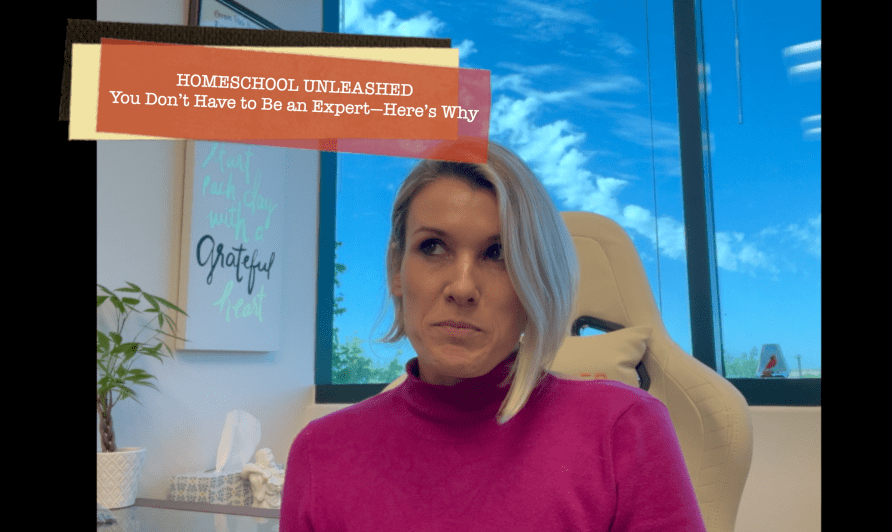
For a YouTube video pertaining to this article check out my YouTube channel here: https://youtu.be/Rgp_ApTbkaA
And if you’re new to homeschooling and want a step-by-step guide, be sure to check out Homeschool Unleashed: How to Start, Plan, and Thrive in Your Homeschooling Journey, available on Amazon and Barnes & Noble. You’ll also find free resources and learning tips at homeschoolunleashed.com.
Why You Don’t Need to Be an Expert
Most of us have grown up in a system where teaching is presented as a one-way street: the teacher is the expert, the student is the receiver. But homeschooling allows for a richer, more dynamic process.
Think about this: when your children were toddlers, you didn’t need a degree in speech therapy to teach them how to talk. You simply modeled words, repeated phrases, and engaged with them daily. They absorbed language naturally by watching and imitating you.
Learning academic material works the same way. Children don’t need you to have all the answers. What they need is to see how an adult approaches learning: asking questions, reading carefully, taking notes, making mistakes, and finding solutions.
In fact, studies show that children thrive when adults demonstrate “learning in action.” Psychologist Albert Bandura’s famous Social Learning Theory highlights that kids learn by observing and imitating the behavior of those around them. If they see you actively working through a math problem or pausing to look up a new word, they understand that persistence, resourcefulness, and curiosity are the keys to growth.
Modeling Learning: Why It Works
When you sit beside your child with a textbook in hand, you are doing more than teaching a subject—you are modeling the art of learning itself. This matters because research shows that children mimic not just what we say, but how we think.
- A study published in Developmental Psychology found that children who observe adults persisting through challenges are more likely to persist themselves in difficult tasks.
- According to Harvard’s Center on the Developing Child, children’s brains build neural pathways for problem-solving through co-learning experiences, where they watch adults engage in reasoning, note-taking, and trial-and-error.
- Research from the Journal of Educational Psychology confirms that modeling note-taking behaviors improves children’s recall and comprehension because it trains them to identify, organize, and process key information.
By demonstrating the behaviors of a learner—reading aloud, underlining important phrases, asking “why” questions, or jotting down notes—you are training your child’s brain in metacognition: the awareness of how learning happens.
The Power of Learning Together
Many parents are surprised to discover that co-learning strengthens family bonds while boosting academic outcomes. When you learn alongside your children, you:
- Build trust – Kids see that it’s okay not to know everything and that even adults make mistakes. This creates a safe space where learning isn’t tied to perfection.
- Encourage curiosity – Instead of a “teacher vs. student” dynamic, homeschooling becomes a shared adventure.
- Normalize resilience – Children internalize that confusion and mistakes are part of growth.
For example, imagine tackling a high school biology textbook together. You don’t have to memorize every cell structure beforehand. Instead, you can say: “I don’t know this term either—let’s look it up together.” That one statement communicates to your child that learning is a process, not a performance.
Don’t Shy Away from Complex Material
One of the most empowering truths about homeschooling is that children can handle more than we often give them credit for. While schools often stick to grade-level content, homeschoolers have the freedom to stretch beyond those limits.
You don’t need to be afraid of pulling material from a college-level textbook or diving into advanced history, literature, or science. Complex material can be broken into smaller, understandable steps. Children are natural pattern-seekers, and when adults guide them through the process, they often rise to the challenge.
Statistics on Cognitive Stretching
- A University of Cambridge study on “cognitive acceleration” found that children exposed to complex reasoning tasks above their grade level showed significant long-term academic gains compared to peers.
- Research in Child Development indicates that children who are regularly challenged with material just beyond their comfort zone demonstrate improved problem-solving abilities and greater confidence in independent learning.
The key is scaffolding: break the concept down, use examples, draw diagrams, and ask guiding questions. Over time, what once felt impossible becomes manageable.
The Role of Note-Taking and Writing
One of the simplest yet most effective tools for homeschooling is teaching your kids to write notes alongside you. This isn’t just about keeping track of information—it’s about reinforcing memory and comprehension.
Why Note-Taking Works
- According to a study in Psychological Science, students who take notes by hand retain information more effectively than those who type notes, because handwriting requires deeper processing of ideas.
- Neuroscience research shows that writing by hand stimulates multiple regions of the brain involved in learning, including the reticular activating system, which filters and prioritizes information.
- Note-taking also develops executive function skills such as organization, focus, and summarization.
When parents take notes alongside their children, they model active study habits and provide a concrete example of how to process and organize complex material. Even simple practices like creating a word bank, outlining chapters, or sketching quick diagrams can dramatically improve retention.
Enriching Learning Beyond Textbooks
Homeschooling doesn’t mean being chained to a desk or workbook all day. In fact, one of its greatest strengths is the ability to connect learning with real-world experiences.
Here are some ways parents can supplement learning material:
- Games and Simulations – Math board games, history role-playing activities, or online science simulations make abstract concepts concrete.
- Field Trips – Visits to museums, historical sites, or nature reserves provide sensory-rich experiences that cement classroom learning. According to the American Alliance of Museums, students who go on museum field trips demonstrate improved critical thinking and historical empathy.
- Documentaries and Educational Films – Platforms like PBS, Curiosity Stream, or even YouTube offer high-quality documentaries that expand children’s knowledge beyond textbooks.
- Everyday Learning – Cooking becomes a math lesson, gardening becomes a science project, and family budgeting becomes a real-world application of economics.
The goal isn’t just to cover material—it’s to ignite curiosity and show your children that learning is everywhere.
Building a Lifelong Learning Mindset
One of the greatest gifts of homeschooling is the chance to instill a lifelong love of learning. When children see their parents reading, questioning, and exploring, they understand that education doesn’t end with a diploma.
- A study from Pew Research found that 73% of adults who grew up with parents who modeled reading habits continued those habits into adulthood.
- Lifelong learners are shown to have better adaptability, resilience, and career satisfaction, according to the OECD Learning Report.
By embodying curiosity, you’re not just preparing your children for standardized tests—you’re preparing them for life.
Practical Tips for Parents Who Feel Unqualified
If you’re worried about not being “good enough” to homeschool, try these strategies:
- Learn in bite-sized chunks – You don’t have to master the whole textbook overnight. Read a section at a time with your child.
- Use community resources – Join co-ops, online classes, or local homeschool groups for subjects you feel less confident about.
- Leverage technology – Free platforms like Khan Academy, Crash Course, or Coursera offer expert explanations in almost every subject.
- Model humility – Say openly: “I don’t know, but let’s find out together.” That’s one of the most powerful lessons you can teach.
- Celebrate progress, not perfection – The goal is growth, not expertise.
Motivation for Parents on the Fence
If you’re still unsure about homeschooling, remember this: your willingness to learn is enough.
Children don’t need perfect teachers—they need engaged parents who show them how to navigate the world with curiosity and resilience. Homeschooling is not about being the smartest person in the room—it’s about being the most willing.
Imagine the legacy you create when your child looks back and remembers: “My mom/ dad didn’t know everything, but she/ he always sat beside me, eager to discover.” That is what plants the seeds of lifelong learning.
Final Thoughts
Homeschooling is less about expertise and more about attitude. By embracing curiosity, modeling learning, and being willing to grow alongside your children, you give them something far more powerful than a perfect curriculum—you give them the courage to become lifelong learners.
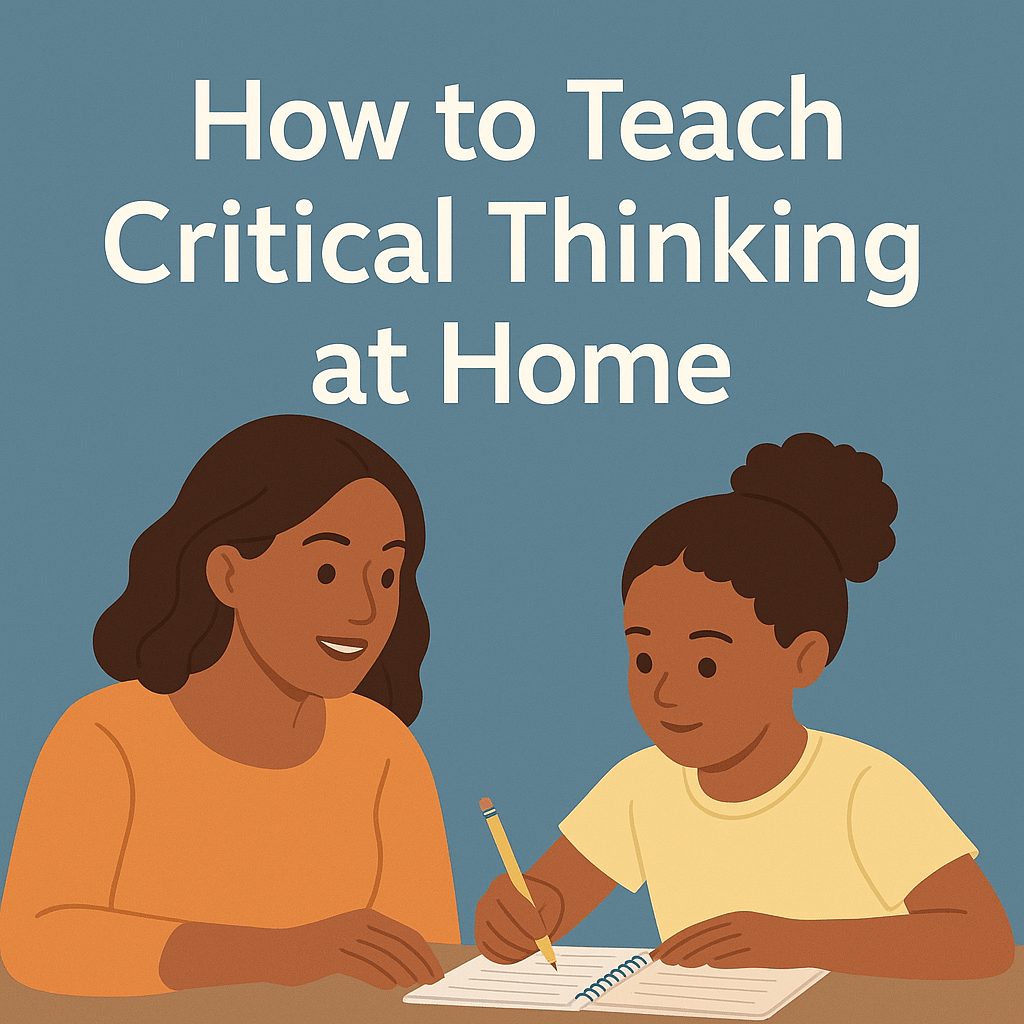
So pick up that textbook, grab a notebook, and sit down next to your child. Don’t worry about what you don’t know. Focus instead on what you’re willing to discover.
For more encouragement, strategies, and step-by-step guides, visit homeschoolunleashed.com. And for parents starting fresh, check out Homeschool Unleashed: How to Start, Plan, and Thrive in Your Homeschooling Journey, available now on Amazon and Barnes & Noble.



 Homeschool Unleashed
Leave a comment