
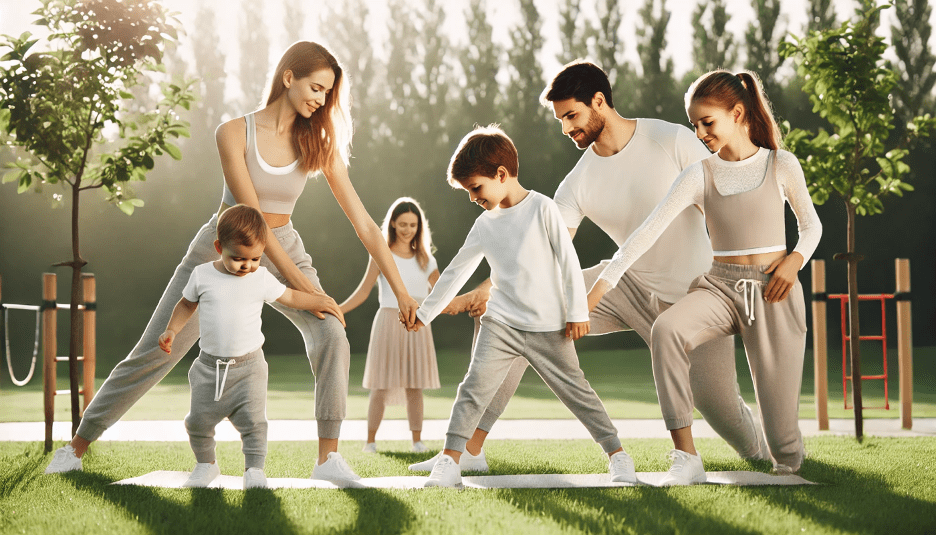
In today’s fast-paced, tech-dominated world, families often struggle to find meaningful ways to connect. However, one powerful way to strengthen family bonds while improving overall health is by exercising together. Working out as a family not only builds stronger relationships but also instills lifelong habits of health and wellness in children. In this article, we’ll explore the physical, mental, and emotional benefits of family exercise, offer creative workout ideas, and provide practical tips to make family fitness a sustainable practice. We will explore family fitness benefits and share family exercise ideas to keep your loved ones active, happy, and healthy.
The Science Behind Family Workouts
Physical Development in Children
Regular exercise is essential for children’s physical growth and development. According to the Centers for Disease Control and Prevention (CDC), children aged 6 to 17 should engage in at least 60 minutes of moderate-to-vigorous physical activity daily. Regular exercise helps build strong bones, improve cardiovascular health, and maintain a healthy weight, reducing the risk of chronic illnesses like obesity and diabetes.
A study published in the Journal of Pediatrics found that children who engage in physical activities with their families are more likely to stay active into adulthood. Parents play a crucial role in modeling healthy behaviors, and children who see their parents prioritizing fitness are more likely to adopt the same habits.
Mental and Emotional Health
Exercise doesn’t just benefit the body—it’s a natural mood booster. The release of endorphins during physical activity can reduce symptoms of anxiety and depression while enhancing self-esteem. A 2021 study in Frontiers in Psychology revealed that physical activity in children is linked to improved focus, better academic performance, and reduced stress.
For families, exercising together creates a shared sense of accomplishment and reduces household stress. Activities like yoga or hiking can promote mindfulness, helping both children and parents manage emotions and build resilience.
Creative Ways to Work Out as a Family
These family-friendly workout routines will inspire families to stay active together while having fun.
1. Nature Hikes and Outdoor Adventures
Explore local parks, forests, or nature reserves together. Hiking offers a great cardio workout and can double as an educational opportunity—identify local flora and fauna or learn about the geology of the area. For added fun, create a scavenger hunt list of things to spot along the trail.
2. Community Sports and Classes
Sign up for community sports leagues or fitness classes that welcome families. Soccer, basketball, or even dance classes can be a fantastic way to bond while staying active. Many gyms now offer family-friendly memberships with group fitness sessions tailored to all ages.
3. Home Workout Challenges
Turn your living room into a mini gym! Design a circuit workout with stations for jumping jacks, push-ups, and burpees. Use household items like water bottles as weights. For extra motivation, track progress on a family fitness chart and celebrate milestones with fun rewards.
4. Swimming and Water Activities
Swimming is a low-impact workout suitable for all ages. Spend weekends at a local pool or plan a family outing to a nearby lake. Activities like kayaking, paddleboarding, or even water aerobics can add variety and excitement to your family fitness routine.
5. Explore New Sports
Introduce your family to diverse sports such as tennis, rock climbing, martial arts, or roller skating. Each activity can become a springboard for learning about its history, rules, and health benefits. For example, learning about the origins of martial arts could lead to fascinating discussions about discipline and mindfulness.
Combining Fitness and Education
Incorporating family sports and education into your routine ensures that physical activity supports academic performance and lifelong learning. One of the unique benefits of family workouts is the opportunity to integrate physical activity with academic enrichment. Here are some ways to marry fitness with learning:
• Research the History of Sports: After trying a new sport, encourage your children to research its origins. For instance, learning about the ancient Olympic Games can provide historical context for track and field events.
• Health Benefits Exploration: Assign a mini research project on how specific exercises improve the body. For example, after a family yoga session, your child could investigate how stretching impacts flexibility and reduces stress.
• Math and Fitness: Use workout routines to teach math skills. Calculate heart rates, measure distances on a hike, or count the number of reps completed during a workout.
By linking fitness to academics, you create a holistic learning experience that fosters curiosity and reinforces the value of lifelong health.
How Often Should Families Work Out Together?
To establish a sustainable routine, aim to exercise as a family at least 3–5 times per week. Sessions can range from 30 minutes to an hour, depending on the activity and the age of the participants. Here’s a suggested weekly schedule:
• Monday: Family walk or light jog around the neighborhood (30 minutes).
• Wednesday: Indoor circuit training with bodyweight exercises (30–45 minutes).
• Friday: Community sports or family swim session (1 hour).
• Saturday: Outdoor hike or bike ride (1–2 hours).
• Sunday: Yoga or stretching session for relaxation (30 minutes).
The key is consistency and variety. By mixing high-energy activities with restorative ones, you keep the routine enjoyable and sustainable.
The Lifelong Benefits of Family Fitness
Exercising as a family creates more than just healthier bodies—it cultivates stronger relationships and lifelong memories. Children who grow up in active households are more likely to view fitness as a natural part of life, not a chore. Moreover, family workouts offer a chance to disconnect from screens and reconnect with one another, fostering communication and trust.
Whether it’s sweating it out in the gym, conquering a hiking trail, or mastering a new sport together, the time invested in family fitness will pay dividends in both physical and emotional well-being. So lace up your sneakers, grab your water bottles, and start building the habits that will benefit your family for generations to come.
Conclusion
Family workouts are more than just a way to stay active—they are an investment in your family’s health, happiness, and future. By making exercise a shared experience, you strengthen both body and mind while teaching valuable life lessons. Start small, stay consistent, and most importantly, have fun. After all, the family that sweats together truly stays together. With these fitness tips for families, you can create lasting habits that will improve physical health and strengthen family connections.





Leave a Reply