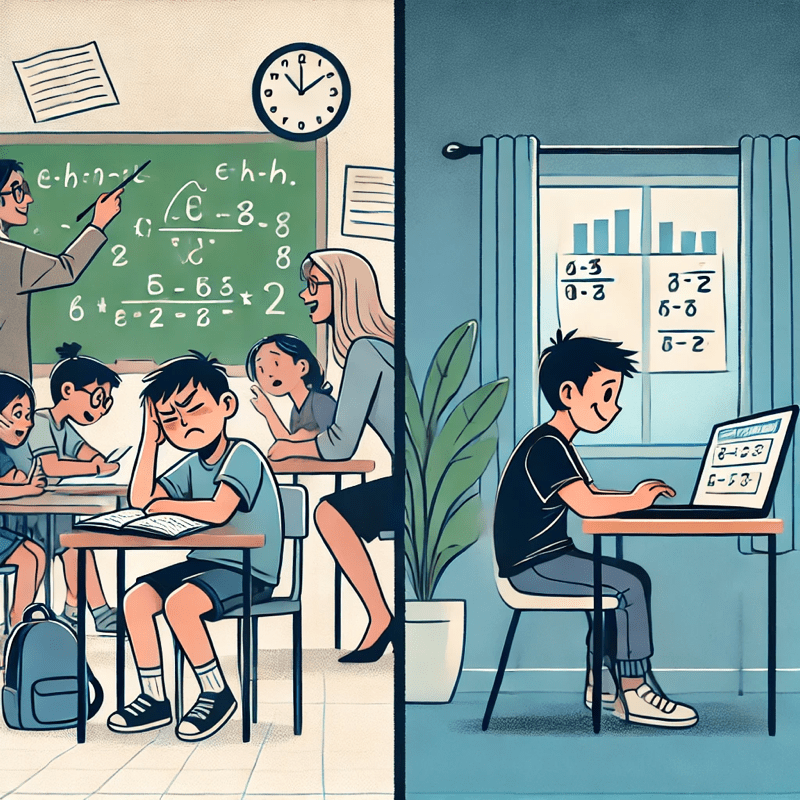
In recent years, a troubling trend has emerged in the United States: a significant decline in students’ math proficiency. According to the National Assessment of Educational Progress (NAEP), often referred to as the Nation’s Report Card, only 23% of eighth-graders were proficient in math in 2023, a sharp decrease from previous years. This decline is not isolated; similar patterns have been observed nationwide, raising concerns about the effectiveness of traditional schooling methods in teaching mathematics.
Factors Contributing to the Decline
Several factors have contributed to this decline in math skills among students in traditional schools:
1. Chronic Absenteeism: In New York City, approximately 35% of public school students, equating to around 300,000 children, were chronically absent in the 2023-2024 school year. Chronic absenteeism is defined as missing 10 or more days in a 180-day school year. This significant absenteeism has been linked to lower academic performance, particularly in subjects like math that require consistent practice and cumulative learning.
2. Pandemic Disruptions: The COVID-19 pandemic caused unprecedented disruptions in education, leading to a shift to online learning and subsequent challenges in maintaining educational standards. By spring 2023, only 56% of fourth-graders were performing on grade level in math, down from 69% in 2019.
3. Summer Learning Loss: Students often experience a regression in academic skills during the summer break, known as “summer slide.” This loss is more pronounced in mathematics, with students losing an average of two months of grade-level equivalency in computational skills over the summer.
4. One-Size-Fits-All Approach: Traditional classrooms often adhere to a standardized curriculum that may not address individual learning needs. This approach can leave some students behind, especially in math, where concepts build upon one another. Students who fail to grasp foundational concepts may struggle with more advanced topics, leading to a cumulative deficit in understanding.
The Case for Homeschooling and Online Math Courses
Given these challenges, many parents are exploring alternatives to traditional schooling to ensure their children receive a robust math education. Homeschooling, supplemented with online math courses, offers a personalized and effective approach to learning mathematics.
Benefits of Homeschooling
1. Customized Learning Pace: Homeschooling allows parents to tailor the curriculum to their child’s learning pace. If a student struggles with a particular math concept, they can spend additional time mastering it before moving on, ensuring a solid foundation.
2. Focused Attention: With homeschooling, students receive one-on-one attention, allowing for immediate feedback and targeted instruction. This individualized approach can address specific areas of difficulty more effectively than a traditional classroom setting.
3. Flexible Scheduling: Homeschooling provides the flexibility to incorporate learning into daily life, making it possible to apply mathematical concepts to real-world situations, thereby enhancing understanding and retention.
Advantages of Online Math Courses
1. Mastery-Based Progression: Many online math platforms are designed to ensure students master each concept before progressing. This step-by-step approach prevents gaps in knowledge, which is crucial in math, where each concept builds upon the previous one.
2. Interactive Learning Tools: Online courses often incorporate interactive tools, such as videos, quizzes, and games, to make learning engaging and cater to various learning styles. These resources can help clarify complex concepts and provide immediate feedback.
3. Accessibility and Convenience: Online courses are accessible from anywhere with an internet connection, allowing for flexible learning schedules that can accommodate a family’s unique needs.
Addressing Common Concerns
Some parents may have concerns about homeschooling and online education, such as socialization opportunities and the quality of education. However, many homeschooling communities offer group activities, co-ops, and extracurriculars that provide social interaction. Additionally, numerous online platforms have been recognized for their rigorous and comprehensive math curricula.
Conclusion
The decline in math proficiency among students in traditional schools is a pressing concern that requires immediate attention. While systemic changes in public education are necessary, parents have the power to take their children’s education into their own hands. By embracing homeschooling and utilizing online math courses, parents can provide a personalized, mastery-based learning experience that addresses the root problems in math education. This proactive approach ensures that children build a strong mathematical foundation, fostering confidence and competence in a subject essential for their future success.
Call to Action
If you’re a parent concerned about your child’s math education, consider exploring homeschooling and online math courses as viable alternatives to traditional schooling. Research various online platforms to find one that aligns with your educational philosophy and your child’s learning style. Connect with local homeschooling groups to build a supportive community. By taking these steps, you can play an active role in reversing the trend of declining math proficiency and set your child on a path to academic success.
🌟 Want even more homeschooling tips and free resources? Visit www.HomeschoolUnleashed.com for expert guidance, curriculum recommendations, and support on your homeschooling journey! 🌟




Leave a Reply