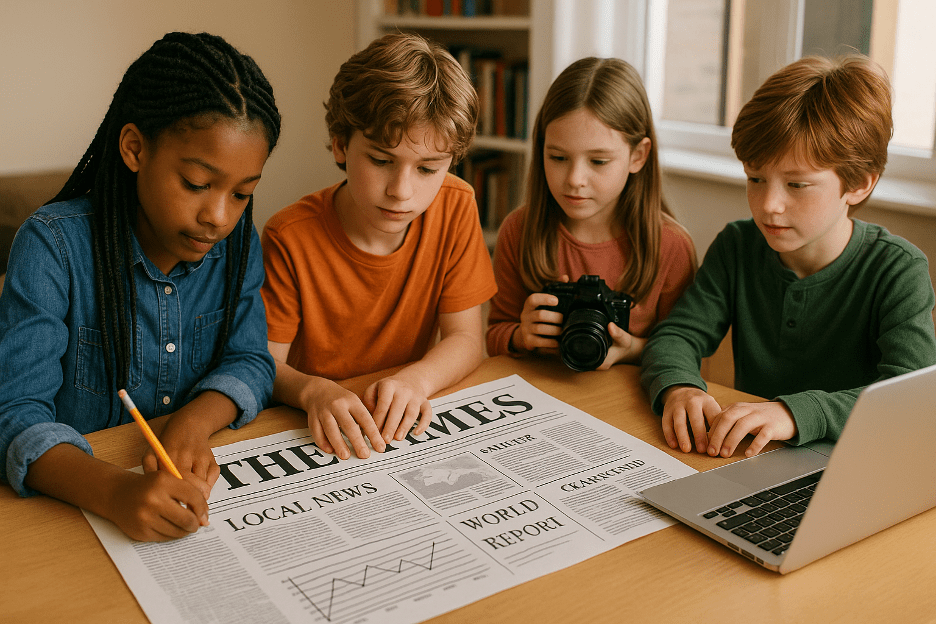
Are you looking for a meaningful and creative way to help your homeschoolers stay informed about the world while also building real-world skills? Here’s a fun and educational idea that blends current events, writing, social studies, and entrepreneurship all into one dynamic project: creating a student-run newspaper.
This project doesn’t just teach your child about what’s happening in the world—it also sharpens their research, writing, interviewing, photography, and public speaking skills. And if you want to add a twist of business savvy? Let them sell their finished paper to neighbors, family, or your local homeschool group.
In this article, we’ll guide you step-by-step through this exciting homeschool project and show you how to turn it into a rich educational experience your child will never forget.
Why Current Events Matter in Homeschool Education
In a world that’s more interconnected than ever, helping children understand current events is essential. When kids follow the news, they:
- Become more informed and empathetic citizens
- Improve critical thinking and analytical skills
- Develop media literacy and understand bias
- Learn to connect historical context with modern issues
- Gain confidence when discussing world affairs
Homeschooling provides the flexibility to explore these topics in creative and hands-on ways, and what better way to do that than by producing a newspaper?
What Skills Does Creating a Newspaper Teach?
Creating a newspaper from scratch is no small task—and that’s exactly why it’s such a valuable learning experience. Here’s what your child will practice:
- Reading & Research Skills – Reading reliable news sources and conducting fact-based research.
- Writing & Editing – Crafting clear, concise news articles, editorials, and human interest stories.
- Photography – Taking relevant, well-composed pictures for visual storytelling.
- Interviewing & Communication – Speaking with real people, forming questions, and listening for details.
- Public Speaking – Reading news aloud, discussing opinions, or even podcasting their findings.
- Technology & Design – Using digital tools like Canva or Microsoft Word to format and lay out the paper.
- Entrepreneurship – Learning how to price, market, and sell their final product to the public.
- Social Awareness – Developing a broader understanding of politics, social justice, the environment, and more.
How to Get Started: Step-by-Step Newspaper Project Plan
Let’s break the project down into clear, manageable steps so you can adapt this activity for any age group or learning level.
Step 1: Define the Scope of the Newspaper
Decide with your child (or group of children) what kind of paper they want to create:
- Will it be a weekly, bi-weekly, or monthly publication?
- What sections will it have? Common suggestions include:
- Local news
- National news
- World events
- Politics
- Weather
- Stock Market snapshot
- Editorials
- Student opinions
- Real estate trends
- Science & Technology
- Entertainment or Book Reviews
- Classified Ads
This step teaches kids how to organize information and gives structure to the project.
Step 2: Assign Roles or Rotate Responsibilities
If you have multiple kids or are part of a homeschool group, assign different roles:
- Editor-in-Chief – Oversees the whole project
- Reporters – Research and write articles
- Photographers – Take or gather images
- Interviewers – Collect quotes and conduct interviews
- Layout Designers – Format the paper digitally
- Sales & Marketing – Promote and distribute the final product
If it’s just your child, they can rotate through these roles for a well-rounded experience.
Step 3: Research & Report
This is where the real-world learning begins.
Children can gather information by:
- Reading from credible news outlets (e.g. AP, BBC, Reuters, etc.)
- Watching local news or documentaries
- Visiting local government websites or community bulletin boards
- Attending local events or town hall meetings
- Interviewing community members, neighbors, or family
Encourage them to write objectively when reporting hard news and persuasively when writing opinion or editorial pieces. This also helps introduce them to the difference between news and opinion journalism.
Step 4: Include Unique Sections for a Realistic Newspaper Feel
To make the newspaper look official and well-rounded, here are some extras your child can add:
- Weather Reports – Pull forecasts from local weather apps and create a 3-day or weekly forecast graphic.
- Stock Market Snapshot – List prices of major indices (Dow Jones, NASDAQ) or kid-friendly stocks (Disney, LEGO, Apple).
- Local Real Estate Update – Look at homes for sale and discuss trends.
- Classified Ads – Fake or real ads like “Babysitter Available” or “Garage Sale This Saturday!”
- Horoscopes or Comic Strip – Add fun and creativity!
These additions will make the paper more engaging and teach layout balance and audience awareness.
Step 5: Build the Newspaper
Now it’s time to lay everything out using online tools. Canva.com is a great (free) option with newspaper templates that are drag-and-drop friendly. Other alternatives include:
- Google Docs or Microsoft Word
- Adobe Express
- Lucidpress
- Book Creator (for younger kids)
Include a front page with a logo, date, and headlines. Don’t forget to credit authors and photographers.
Step 6: Print & Distribute (Optional: Sell!)
Once complete, print out copies of the newspaper and:
- Mail or hand-deliver to friends and family
- Create a newsstand outside your home and sell them
- Host a “release party” or reading session
- Share digital versions by email or homeschool group
Selling the paper can teach your child about pricing, budgeting, marketing, and even profit margins.
You could price the paper at $1 or let readers donate what they can. Include a small flyer with “Meet the Reporters” or a “Thank You for Supporting Student Journalism” message.
Step 7: Reflect & Repeat
Encourage your kids to reflect on the experience:
- What did they learn?
- Which part was their favorite?
- What would they do differently next time?
- Did they learn anything surprising about the world—or themselves?
This reflection step reinforces the value of the learning process and builds confidence.
Collaboration Tip: Bring Your Homeschool Group Into It
This is a perfect project to expand into your local homeschool group. Imagine a collaborative homeschool newspaper where:
- One family handles local coverage
- Another tackles national and world news
- Someone focuses on entertainment and comics
- The older students act as editors
Not only does this create a sense of community, but it mimics a real newsroom setting and encourages peer learning and collaborative effort.
If you’re part of an online homeschooling forum, you could even compile a digital newspaper PDF shared across families nationwide.
Topics to Include for a Balanced Worldview
Expose your child to a diverse range of news categories. Here are ideas to consider for balanced coverage:
- Politics & Governance – Age-appropriate reporting on elections, new laws, local government
- Geopolitics – Summaries of global conflicts, trade deals, or peace efforts
- Economy & Real Estate – Explain inflation, housing prices, or basic economic principles
- Science & Environment – Report on recent discoveries, climate change, and space missions
- Social Justice – Cover stories on activism, diversity, or historical commemorations
- Community Events – Highlight charity drives, festivals, or farmer’s markets
- Editorials – Let kids share opinions on issues like social media, screen time, or education
Homeschooling Meets Real-World Relevance
This newspaper project checks all the boxes: it’s educational, interactive, collaborative, and fun. It prepares your child to engage with the world thoughtfully and builds 21st-century skills they’ll use for life.
Best of all, it’s totally customizable—scale it for a second grader or challenge a high school student to produce a professional-grade publication.
So if you’re ready to bring current events into your homeschool curriculum in a hands-on, meaningful way, start building your family’s first newspaper today.




Leave a Reply